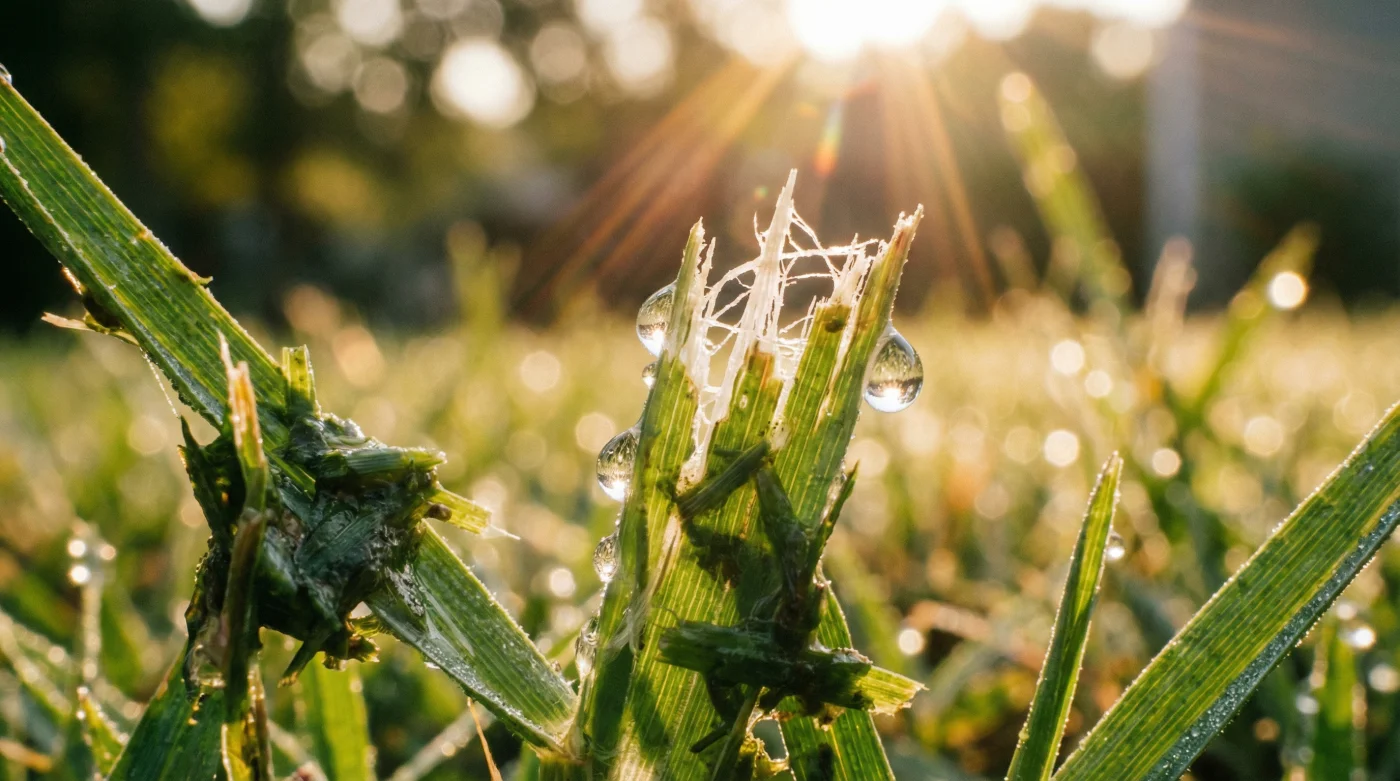
You wake up before the sun crests the neighborhood trees. The air still holds that rare, cool stillness of a mid-July morning, and the grass is shimmering under a heavy coat of dew. You drag the mower out of the garage, eager to beat the stifling afternoon heat that will soon blanket the pavement. It feels like a responsible, productive start to your Saturday.
You push the machine across the lawn, leaving clean, dark stripes in the silver moisture. Wet clippings clump heavily against the plastic deck, and the engine drones steadily onward, masking the subtle damage happening right under your feet. What feels like a routine, proactive chore is actually a microscopic battlefield.
To the naked eye, you are simply maintaining your yard and crossing a task off your weekend list. The smell of cut grass and damp earth makes it feel like you are doing exactly what a diligent homeowner should do. But down at the soil level, the water droplets clinging to those Bermuda blades are drastically changing the physics of the cut.
When you mow wet grass, the metal blade doesn’t slice through the plant material. It grabs, pulls, and tears the stalks violently. This well-intentioned morning routine is exactly why so many thick lawns suddenly turn thin, patchy, and yellow by mid-August, rolling out the red carpet for systemic decay and fungal infections.
The Microscopic Violence of a Wet Cut
Think of trying to cut a soaked piece of newspaper with a pair of household scissors. No matter how perfectly sharpened the metal edges are, the wet paper folds, frays, and mashes between the blades. Your Bermuda grass behaves the exact same way when coated in thick morning condensation.
Bermuda is a uniquely tough, wiry grass by nature, evolved to withstand intense sunlight and heavy foot traffic. When bone dry, the stalks stand up straight, offering a highly resistant surface that snaps cleanly under a spinning mower blade. A clean cut heals quickly, effectively sealing off the exposed inner tissue from airborne pathogens within a matter of hours.
But morning dew weighs the grass down and acts as an unwanted lubricant. The mower blade slides across the stalk rather than biting into it, resulting in a shredded, ragged tip that looks like a frayed rope under a microscope. That jagged wound stays open far longer than a clean slice.
Worse still, the moisture trapped inside the mower deck creates a highly efficient delivery system for fungal spores. You aren’t just wounding the plant; you are actively smearing a bacterial slurry directly into the open cuts, practically guaranteeing an outbreak of lawn rust disease.
Marcus Thorne, a 54-year-old turf manager who oversees a high-traffic athletic complex in central Texas, learned this the hard way. Early in his career, to spare his grounds crew from the brutal 100-degree Fahrenheit afternoons, he mandated that all Bermuda fields be mowed before 9 AM. The morning dew was thick, but the crew got the job done before the heat index spiked.
- Birch plywood panels hide secretly inside the commercial flooring aisle
- Liquid starch seamlessly secures temporary fabric wallpaper over textured drywall
- Mineral oil instantly restores cast iron radiators without toxic fumes
- Dawn dish soap ruins granite countertops over three years
- Hardware stores quietly pull Roundup amid sudden local retail bans
Adjusting Your Schedule Without Melting
Shifting your yard work away from the cool morning hours creates an undeniable logistical friction. Nobody wants to push heavy equipment around when the sun is searing the driveway and the humidity is peaking. But you can adapt your personal schedule to protect both the grass and your own comfort.
For the early riser who loves the quiet productivity of a 7 AM start, you simply need to redirect your physical energy. Use this cool window for trimming dry hedges, pulling weeds from the garden beds, or edging the concrete hardscapes. Leave the mower parked securely until the dew has completely burned off the lawn.
For the heat averse, aim for the golden hour, just as the sun dips below the rooflines but before the evening humidity begins to settle back into the soil. The ambient air temperature drops significantly during this window, but the grass remains perfectly dry from the afternoon baking.
If Saturday afternoon is your absolute only available window to work, break the mowing job into smaller, manageable chunks. Mow the front yard at 3 PM, take a prolonged water break inside the air conditioning, and tackle the back yard at 4 PM. Pacing protects your physical endurance while ensuring the grass gets the dry, clean shear it desperately needs to stay thick.
The Surgical Approach to Turf Care
Transitioning to a dry-cut method requires a slight shift in how you mentally assess your yard before starting the engine. You are no longer just looking at the vertical length of the grass; you are looking at the micro-climate and moisture content of the immediate environment.
Before you even check the gas tank, walk out into the yard in your socks or bare feet. If you feel any dampness seeping through, or if the grass feels slick against your skin, the canopy is simply not ready for a blade. Assess the localized moisture content before committing to the chore.
The actual process of dry-mowing is a mindful exercise in equipment management. When the grass is completely dry, the mower processes clippings far more efficiently, preventing heavy clumps from suffocating the turf below. Here is your tactical toolkit for executing a flawless summer cut:
- The Tissue Test: Press a dry paper towel firmly into the thickest part of the turf canopy. If it pulls up damp or discolored by water, wait another hour.
- The Dew Point Rule: Only mow when the air temperature has risen safely above the morning dew point, ensuring the ambient air is actively drying the yard rather than moistening it.
- Maximum Velocity: Keep the mower engine running at its absolute maximum RPM to ensure the blade tip speed is high enough to cleanly sever the dry, wiry stalks.
- Deck Clearance: Clean the underside of your mower deck with a stiff brush every three mows to prevent dry debris from clumping and restricting the critical airflow needed to lift the grass.
Beyond the Aesthetic Green
Changing when you cut the grass feels like a minor detail, perhaps even an annoying inconvenience when you are trying to plan out a busy weekend. But this seemingly small adjustment fundamentally alters the biological trajectory of your yard’s health.
You stop fighting a frustrating, losing battle against fungal infections and localized dead spots. You stop spending your weekends wondering why the lawn looks bruised and brown despite your consistent hard work. You partner with the environment, allowing the grass to defend itself naturally rather than constantly relying on expensive chemical interventions.
Mastering this specific timing brings a quiet, lasting peace of mind to your outdoor maintenance routine. You learn to read the conditions of the yard rather than blindly following a rigid clock. The yard becomes a living system you work alongside, rather than a surface you simply dominate.
When you finally push that mower out in the late afternoon, listening to the crisp, satisfying hum of a perfectly clean cut, you know you aren’t just doing a chore. You are fostering a resilient, self-sustaining patch of earth that will confidently thrive long after the brutal summer heat finally fades away.
A sharp blade is entirely useless if your canvas is soaking wet; wait for the sun to do the hard work for you.
| Mowing Window | Physical Impact on Bermuda Grass | Long-Term Result for You |
|---|---|---|
| Before 10 AM (Heavy Dew) | Blades bend and tear; moisture acts as fungal glue. | High risk of rust disease; patchy, yellowing turf. |
| Mid-Day (High Heat) | Clean cuts, but causes extreme heat stress to the root system. | Requires excessive watering to recover from the shock. |
| Late Afternoon (Dry) | Crisp, clean snap; immediate sealing of the leaf tissue. | Thick, vibrant green growth with zero chemical fungicide needed. |
Common Questions About Bermuda Maintenance
Does dew really cause lawn rust?
Dew itself doesn’t cause rust, but mowing wet grass creates torn, open wounds and spreads fungal spores directly into those damp abrasions.
How long should I wait after a morning rain?
Wait until the grass is completely dry to the touch, which usually takes 4 to 6 hours of direct sunlight after a light shower.
Can I just sharpen my blade to cut wet grass cleanly?
A razor-sharp blade helps, but wet Bermuda grass will still bend away from the metal, causing tearing regardless of the edge.
What if my schedule only allows morning mowing?
If you have no choice, raise your mower deck to the highest setting to minimize the amount of tissue you are tearing, and plan to apply an organic fungicide.
How do I know if my grass is already infected with rust?
Walk through the yard in white shoes; if you notice a powdery, orange-red dust accumulating on the fabric, rust disease is actively spreading.