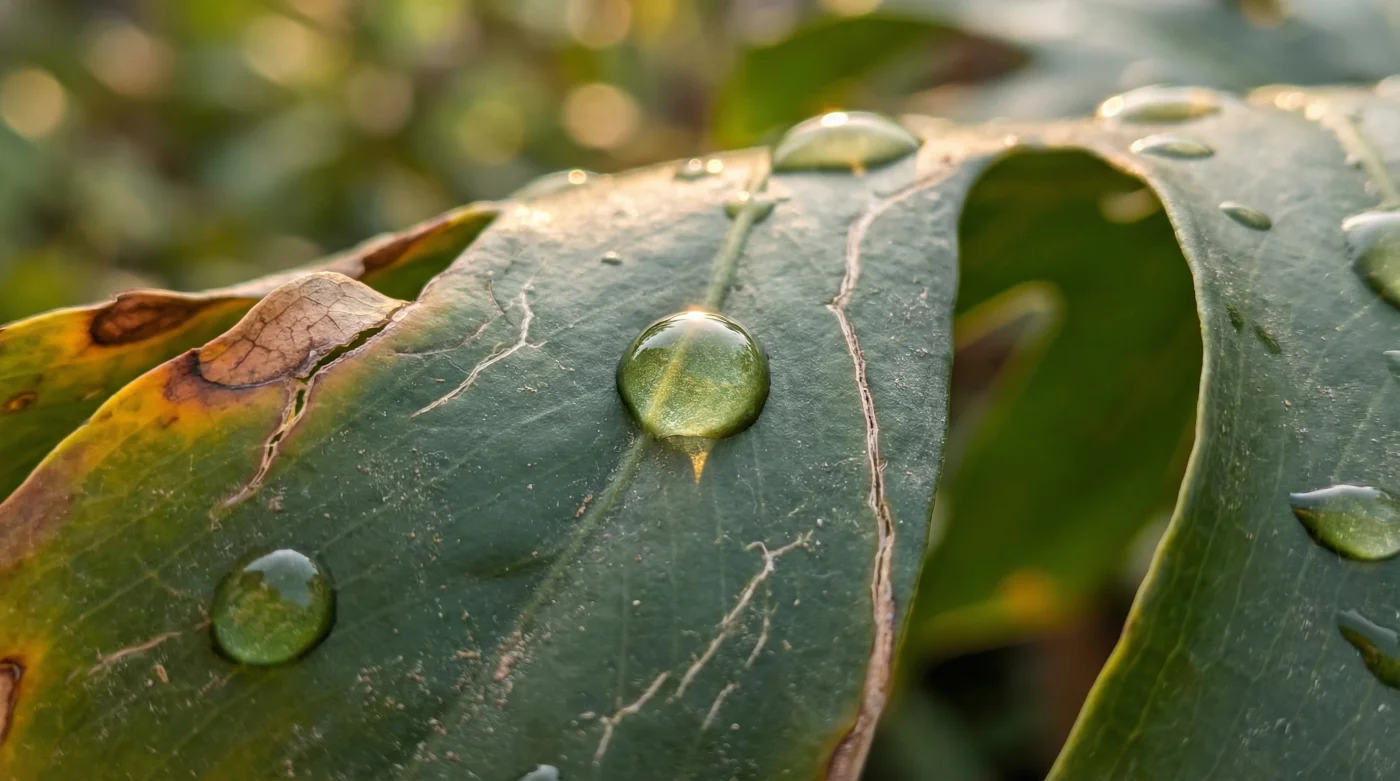
The morning light shifts across the living room floor, catching the massive, fenestrated leaves of your Monstera Deliciosa. You step up to the kitchen sink, twisting the faucet to fill your plastic watering can. It feels like a grounding ritual, a quiet moment of care before the noise of the day begins. You check the soil with your index finger, noting it feels dry right down to the second knuckle, exactly as the instructions recommend.
You pour the water over the dark potting mix, watching it pool briefly before sinking down toward the root system. You are following the rules perfectly, sticking to a strict schedule that promises lush, tropical growth. Yet, over the last few weeks, you have noticed the edges of the oldest leaves turning a crisp, brittle yellow, mimicking signs of sudden drought even though the soil remains damp.
The standard advice floating around the internet insists you just need to adjust your timing, maybe water a day sooner or a day later. We are taught to view houseplant care as a simple transaction: provide moisture, receive growth. But in the artificial ecosystem of a plastic nursery pot, the quality of what you pour is infinitely more crucial than the frequency of the pouring.
When you fill that can straight from the tap, you are delivering a microscopic dose of municipal sanitation chemicals directly into a closed environment. Instead of nourishing the plant, you are layering heavy mineral deposits across delicate root hairs that evolved to drink nothing but pure, unadulterated rain.
The Slow Suffocation of Scheduled Care
Think of a Monstera’s root system like a delicate sponge, designed to absorb moisture fast and breathe in the airy pockets of a loose jungle floor. When you strictly adhere to a weekly watering schedule using tap water, you ignore the invisible buildup happening beneath the surface. Water evaporates, but the chlorine, chloramines, and dissolved minerals do not.
Over months of routine care, these leftover chemicals crystallize. It is akin to wearing clothes stiff with salt after swimming in the ocean; the fabric becomes rigid, choked, and unable to function normally. The roots of your Monstera suffer a similar fate, developing chemical burns that slowly seal off their ability to drink. You are not under-watering your plant; you are suffocating it with sanitation.
This is where the myth of the strict watering schedule falls apart. A calendar cannot tell you when the mineral concentration in your pot has reached a toxic threshold. The plant begins to rot from the roots up, not always because the soil is waterlogged, but because the damaged roots die off and decay in the damp earth.
A Lesson from the Corporate Conservatory
Elias Thorne, a 52-year-old botanical conservator working in the high-rises of downtown Chicago, knows this chemical slow-burn intimately. His job involves rescuing massive, ten-year-old Monsteras from corporate lobbies where well-meaning maintenance staff water them precisely every Friday morning. By implementing a deep, restorative flush, he succeeds in washing the chemical slate clean without ever changing the soil.
Elias discovered that the plants were not dying from a lack of light or an overabundance of care. They were dying because the soil had become a toxic sink for tap water additives. His turnaround strategy never involves fertilizer or repotting right away; it relies entirely on a physical intervention to strip away the chemical residue left behind by city plumbing.
Navigating Your Specific Water Landscape
Not all sinks are created equal, and understanding what flows from your faucet is the first step in protecting your houseplants. Depending on where your home sits on the municipal grid, your Monstera is facing a different type of chemical stress. Identifying this early is crucial for stopping root rot before it takes a fatal hold on the root ball.
For the Urban Apartment Dweller, the primary enemy is chloramine. Unlike traditional chlorine, which will naturally vaporize if you leave a bucket of water sitting overnight, chloramine is formulated to remain stable. It will not evaporate, meaning every drop you pour adds to the permanent chemical load resting against your plant’s roots.
For the Suburban Collector, the issue often stems from home water softeners. These systems swap out hard minerals like calcium for sodium. While this makes your shower feel incredible and keeps your glassware spotless, pouring sodium-laced water into a potted tropical plant is the botanical equivalent of salting the damp earth. The roots dehydrate almost instantly.
The Rainwater Flushing Protocol
To reverse the damage and reset the soil chemistry, you must move away from the habit of topping off the pot. Instead, you need to execute a deliberate flush. This is a physical reset, washing the accumulated salts and chemicals out through the drainage holes.
The process requires a shift in how you handle the plant. You are no longer just keeping it alive; you are executing a medical intervention for your houseplant. Gather your materials and approach the sink or outdoor patio with intention, focusing entirely on clearing its blocked respiratory system.
You will need a few specific items to do this correctly:
- Three to five gallons of pure rainwater or distilled water.
- Water brought to room temperature, roughly 68 to 72 degrees Fahrenheit.
- A basin or deep sink equipped with a clear drain.
- A wooden skewer to gently aerate compacted topsoil.
Start by taking the wooden skewer and gently pressing it into the top two inches of the soil, wiggling it slightly. This breaks up the crust of mineral buildup that forms on the surface. Loosening the hard topsoil allows water to penetrate evenly rather than running straight down the sides of the plastic nursery pot.
Pour the rainwater slowly and steadily over the entire surface of the soil. You want to pour an amount equal to at least twice the volume of the pot. Watch the water flow out of the bottom drainage holes. Initially, it may look slightly discolored or cloudy as the bound-up salts finally break free.
Allow the pot to drain completely for at least thirty minutes. Never let the Monstera sit in the runoff water, as it is now concentrated with the exact chemicals you are trying to remove. Elevating the pot on stones is an excellent way of preventing reabsorption of toxic waste. Once it stops dripping entirely, return it to its usual spot. Repeat this heavy rainwater flush every three to four months.
Listening to the Leaves
Shifting your routine from mindless tap watering to deliberate rainwater flushing changes your entire relationship with the plant. It moves you past the anxiety of strict schedules and dry-knuckle testing, pushing you toward a deeper understanding of how organic things interact with their environment.
When you stop loading the soil with municipal chemicals, the Monstera responds with a robust, resilient energy. The leaves grow larger, the fenestrations become more pronounced, and the anxiety surrounding the chronic threat of root rot fades into memory. You realize that keeping a piece of the jungle in your living room requires honoring the rain that built it.
“You cannot build a thriving jungle by feeding it pool water; you must respect the chemistry of the soil.” – Elias Thorne
| Key Point | Detail | Added Value for the Reader |
|---|---|---|
| Chemical Buildup | Tap water contains chlorine and chloramines that do not evaporate from the soil. | Prevents you from mistaking chemical root burn for standard under-watering. |
| The Schedule Myth | Routine watering ignores the accumulation of salts over time. | Saves you time and anxiety by shifting focus to water quality over strict frequency. |
| Rainwater Flushing | Pouring a large volume of pure water washes away toxic mineral crusts. | Restores the plant’s ability to drink and breathe, reversing yellowing leaves. |
Frequently Asked Questions
Can I just boil tap water to make it safe? Boiling removes chlorine, but it concentrates other minerals and does nothing to remove stable chloramines, meaning it can actually worsen the mineral buildup in your soil.
How often should I flush my Monstera? A thorough rainwater flush every three to four months is sufficient to keep the soil chemistry balanced and clear of toxic salts.
What if I cannot collect rainwater? Distilled water or water filtered through a high-quality reverse osmosis system works exactly the same way, providing a clean slate for the roots.
Will flushing the soil wash away all the nutrients? Yes, a proper flush will remove loose nutrients. You should apply a highly diluted, organic liquid fertilizer a few days after the flush to restore healthy food levels.
Why is my soil turning white on top? That white, crusty layer is the visible manifestation of calcium, sodium, and municipal chemical buildup. It is the clearest sign that a deep flush is overdue.