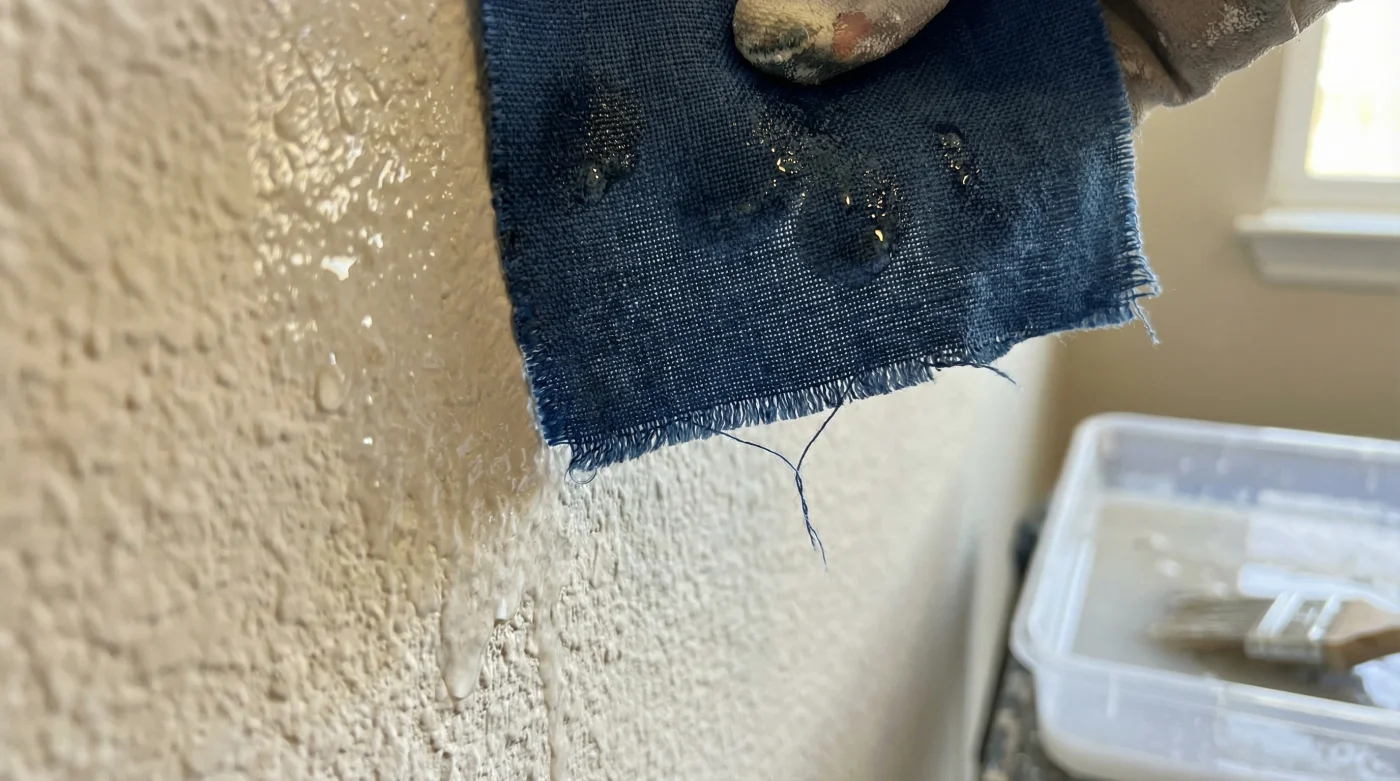
The afternoon sun hits the living room wall, illuminating every shadow of the heavy orange-peel texture. You stand in the center of the room, staring at the standard-issue landlord white paint. It feels less like a blank canvas and more like a gentle but firm restriction. The lease agreement echoes in your mind, specifically the strict clause prohibiting paint, wallpaper, and heavy wall anchors. The smell of fresh, sterile latex paint lingers in the air, a constant reminder that this space belongs to someone else.
You run your fingers over the bumps. The standard expectation is that rental living means existing in a state of transience. You arrange your furniture, hang a few lightweight frames on removable hooks, and accept the sterile, unyielding boundary that surrounds your daily life. You assume that architectural customization requires drywall mud, sanding blocks, and a willingness to forfeit your security deposit.
But professional set decorators and historical preservationists do not play by the same rules. They know that creating an immersive atmosphere does not require permanent destruction or chemical-heavy construction adhesives. They understand how mundane materials interact on a structural level, finding loopholes in the rigid rules of property management.
The secret to bypassing these rental restrictions does not require expensive specialty products from a high-end design boutique. It is sitting quietly on the bottom shelf of the laundry aisle at your local grocery store. A humble bottle of liquid starch holds the power to completely rewrite the rules of your living space, offering a designer finish that vanishes without a trace when your lease is up.
The Papier-Mâché Illusion
Think of liquid starch as a living mortar. Traditional wallpaper paste functions through chemical adhesion, aggressively bonding to the drywall paper and paint. It fights the texture of the wall, demanding a perfectly flat surface to adhere correctly. Starch, however, operates on the principle of tension and crystallization. Instead of fighting the wall’s texture with aggressive glues, the starch bridges the microscopic gaps.
When you saturate a piece of fabric with starch and press it against a textured wall, it acts like a second skin. It is like breathing through a pillow—the fabric softens the harsh ridges of the drywall while allowing the structural integrity of the room to remain intact. As the moisture evaporates, the starch stiffens, locking the woven threads securely over the bumps without cementing them permanently to the paint underneath.
Clara Vance, a 34-year-old theatrical set designer based in Chicago, relies entirely on this method. Faced with transforming a strictly preserved historic parlor into a moody, velvet-draped study for a weekend film shoot, she could not use a single piece of tape or tack. Instead, Clara sourced forty yards of lightweight floral cotton and three jugs of concentrated liquid starch. She rolled the starch directly over the 1920s plaster, pressed the cotton into place, and walked away.
Three days later, the shoot wrapped. Clara grabbed the top corner of the fabric, gave it a gentle tug, and the entire wall covering peeled off in satisfying sheets, leaving the antique walls completely pristine. It is a quiet trick of the trade that turns rigid architecture into a flexible playground.
Tailoring the Technique to Your Space
Fabric behaves entirely differently than paper. It has weight, bias, and weave, which means you can manipulate it to suit the specific flaws of your room. You just need to select your textile with intent, recognizing that not all rooms demand the exact same approach.
For the Texture Purist, dealing with heavy knockdown or popcorn walls requires a textile with body. Choose a medium-weight, one-hundred-percent cotton canvas or a tight broadcloth. The thickness of the fabric bridges the physical gaps, creating a smooth, continuous surface that completely disguises the architectural sins beneath it.
For the Light-Starved Studio, heavy fabrics will make a small room feel like a cave. If your space lacks natural light, seek out lightweight, light-colored cottons, percale bedsheets, or delicate linens. The starch will penetrate these thin fibers quickly, resulting in a slightly translucent, airy finish that bounces light around the room.
For the Bold Maximalist, matching patterns across seams is where the real magic happens. Because fabric does not tear when wet like cheap paper does, you have the luxury of sliding the material slightly while the starch is still damp. This gives you precious minutes to perfectly align complex floral repeats before the starch sets.
The Quiet Ritual of Application
Applying fabric to your walls should never be a rushed, chaotic endeavor. Approach the task with a slow, deliberate cadence. Clear the room, open a window to let the fresh air circulate, and lay your materials out before you begin.
Working with wet fabric requires a grounded stance and a gentle touch. As you smooth the material against the wall, you engage in a methodical, deliberate smoothing motion that feels more like ironing a delicate shirt than executing a home renovation.
- Wash and aggressively dry your chosen fabric twice to pre-shrink it, preventing pulled seams on the wall.
- Pour the liquid starch into a standard paint tray, keeping it undiluted for maximum viscosity over texture.
- Use a standard 3/8-inch nap paint roller to apply a heavy, wet coat of starch directly to the top half of the wall.
- Pin the top edge of the fabric to the ceiling line using three temporary push pins.
- Smooth the fabric downward into the wet starch using a clean, dry foam roller.
- Roll starch onto the bottom half of the wall and continue smoothing downward, trimming the excess at the baseboard with a rotary cutter.
The Tactical Toolkit:
- Concentrated liquid starch (approximately one gallon per 100 square feet).
- 100% cotton or lightweight poly-cotton blend fabric.
- A 3/8-inch nap paint roller for the starch.
- A dry foam roller for smoothing the fabric.
- A sharp rotary cutter or fresh utility blade for precision trimming around outlets.
Reclaiming Your Environment
Living in a rental often feels like living in someone else’s shadow. The walls dictate your aesthetic, silently reminding you that the space is not truly yours. By mastering this simple, removable technique, you strip the landlord of that visual control.
You surround yourself with colors, patterns, and textures that resonate with your personal rhythms. You transform a temporary shelter into a deeply personal sanctuary, cultivating a permanent sense of belonging regardless of whose name is on the deed.
The true luxury of a space isn’t how much you spent building it, but how easily it adapts to who you are today.
| Key Point | Detail | Added Value for the Reader |
|---|---|---|
| Fabric Choice | 100% Cotton or lightweight blends | Prevents stretching and sagging over time. |
| Starch Ratio | Undiluted for textured walls | Fills the gaps of orange-peel drywall for a seamless hold. |
| Removal Process | Warm water and a damp sponge | Guarantees zero damage and a fully returned deposit. |
Frequently Asked Questions
Does liquid starch attract bugs or mold?
As long as the room is properly ventilated during the drying process, the starch crystallizes completely. It does not attract pests or mold once dry.How do I clean the fabric once it is on the wall?
You cannot scrub it, as moisture will reactivate the starch. Use a dry microfiber cloth or a vacuum with a soft brush attachment to dust the surface gently.Will this work over heavily painted brick?
No. The deep mortar lines of brick create too much air space. This method is specifically designed for flat or moderately textured drywall.What happens when I want to move out?
You simply find a top corner, peel the fabric downward, and use a warm, damp sponge to wipe away any residual starch flakes left on the paint.Can I use a fabric protector spray over the finished wall?
It is not recommended. Aerosol sprays can contain solvents that may react unpredictably with the starch layer, causing discoloration or weakening the bond.