You trace the edge of a quartz countertop sample, imagining how the morning light will hit the new island. The layout is set, the brass cabinet pulls are ordered, and you have finally settled on that beautiful, six-burner commercial-style gas range. The physical details of a kitchen remodel are intoxicating, anchoring your mind in the satisfying tactile reality of tile gloss and wood grain.
But an invisible reality is waiting to derail your timeline. As municipalities nationwide quietly react to the polarizing debate around fossil fuels in the home, you are about to face an unseen mechanical upgrade cost. It is not the stove itself that trips the inspector’s clipboard—it is the air hovering directly above it.
While headlines scream about outright bans on gas appliances in new construction, the immediate fallout for your existing home renovation is far more bureaucratic. Local zoning and building codes are rapidly lowering the threshold for what constitutes safe indoor air quality. If you want to keep cooking with fire, you are going to pay a premium to aggressively vent it to the outside.
That stylish range hood you added to your cart might seem like a simple fan, but legally, it is now the trigger for a complex mechanical ecosystem. Upgrading to a professional stove often requires high-capacity ventilation, which is now forcing a sudden budget pivot to keep your home strictly up to code.
The Hidden Arithmetic of Kitchen Air
We tend to think of kitchen ventilation as a vacuum. You burn the toast, you flick a switch, and the smoke disappears up a metal chimney. But a house is not a rigid box; it is a sensitive atmospheric envelope. When you push air out, the house must pull air back in through every crack, window, and keyhole just to maintain equilibrium.
In the past, homes were drafty enough that a high-powered exhaust fan simply pulled fresh air through the walls. Today, homes are sealed tight for energy efficiency. This means your new range hood is no longer just a fan—it is a living, breathing pressure system. The regulatory shift changes our metric of success from simply clearing bacon grease to actively managing the atmospheric weight of your entire ground floor.
If you install a massive hood to handle a high-BTU gas range, it acts like a giant mechanical lung. Without a dedicated way for the house to inhale new air, that fan will pull replacement air from the path of least resistance. Often, that path is down the chimney of your gas water heater or furnace.
This dangerous phenomenon is called backdrafting, and it is the exact reason municipalities are rewriting the rulebook. Instead of venting exhaust out, a powerful hood can depressurize your home, pulling hazardous exhaust gases right back into your living room. The strict new codes are not designed to punish you; they are designed to stop your kitchen from fighting your furnace.
Elias Vance, a 48-year-old municipal code consultant and former HVAC technician in Portland, sees this standoff every Tuesday at the permitting office. “Homeowners walk in with a spec sheet for a gorgeous 100,000 BTU gas range and a matching 900 CFM hood,” Elias notes. “They think they’re buying a weekend cooking experience. I have to tell them they are actually buying a commercial air management system. Once they cross the 400 CFM threshold, the code demands automatic makeup air. A simple $400 fan installation instantly becomes a $2,500 mechanical intervention, complete with heated exterior air intakes and synchronized dampers.”
Navigating the New Airflow Thresholds
Understanding this code shift requires looking closely at your specific renovation plans. The rules bend depending on the thermal output of your stove and the corresponding Cubic Feet per Minute (CFM) rating of your hood. Here is how the new regulations impact different remodeling paths.
For the Modest Upgrader
If you are keeping a standard 30-inch gas stove, your goal is to stay comfortably under the radar. Standard residential ranges rarely output more than 40,000 to 50,000 BTUs combined. By choosing a high-quality hood rated at 390 CFM, you avoid the heavy regulatory hand. You get excellent smoke clearance without triggering expensive makeup air requirements. Focus on hoods with deep capture areas rather than sheer motor strength.
For the Pro-Style Dreamer
If your heart is set on a 36-inch or 48-inch commercial-style gas range, you are entering the heavy-duty zone. These stoves output massive heat, legally requiring 600 to 1,200 CFM hoods. In almost every updated local code, any hood over 400 CFM mandates a dedicated, motorized makeup air system. This involves cutting a second hole in your house, running a separate duct, and installing a damper that opens the exact millisecond you turn on your hood.
For the Historic Homeowner
- Peppermint oil actually draws these common spiders indoors every fall
- HEPA air purifiers circulate invisible mold without this weekly step
- WD-40 attracts door hinge dirt causing permanent metal friction
- Monstera Deliciosa owners are causing root rot with tap water
- Dawn dish soap ruins granite countertops over three years
Calculating Your Kitchen’s Breath
Approaching your kitchen ventilation with mindfulness means doing the math before you finalize your appliance package. It is about balancing your culinary desires with the physical limitations of your home’s air volume.
When calculating your needs, keep the process grounded and methodical. Work through the numbers systematically so you are prepared before the inspector ever sets foot on your property.
The Tactical Toolkit: Airflow Math
- The BTU to CFM Rule: Divide your gas range’s total maximum BTU output by 100. A 60,000 BTU stove legally requires a minimum of 600 CFM of ventilation.
- The 400 CFM Threshold: Memorize this number. The moment your hood’s specification sheet reads 401 CFM or higher, assume you will need to buy and install an automatic makeup air kit.
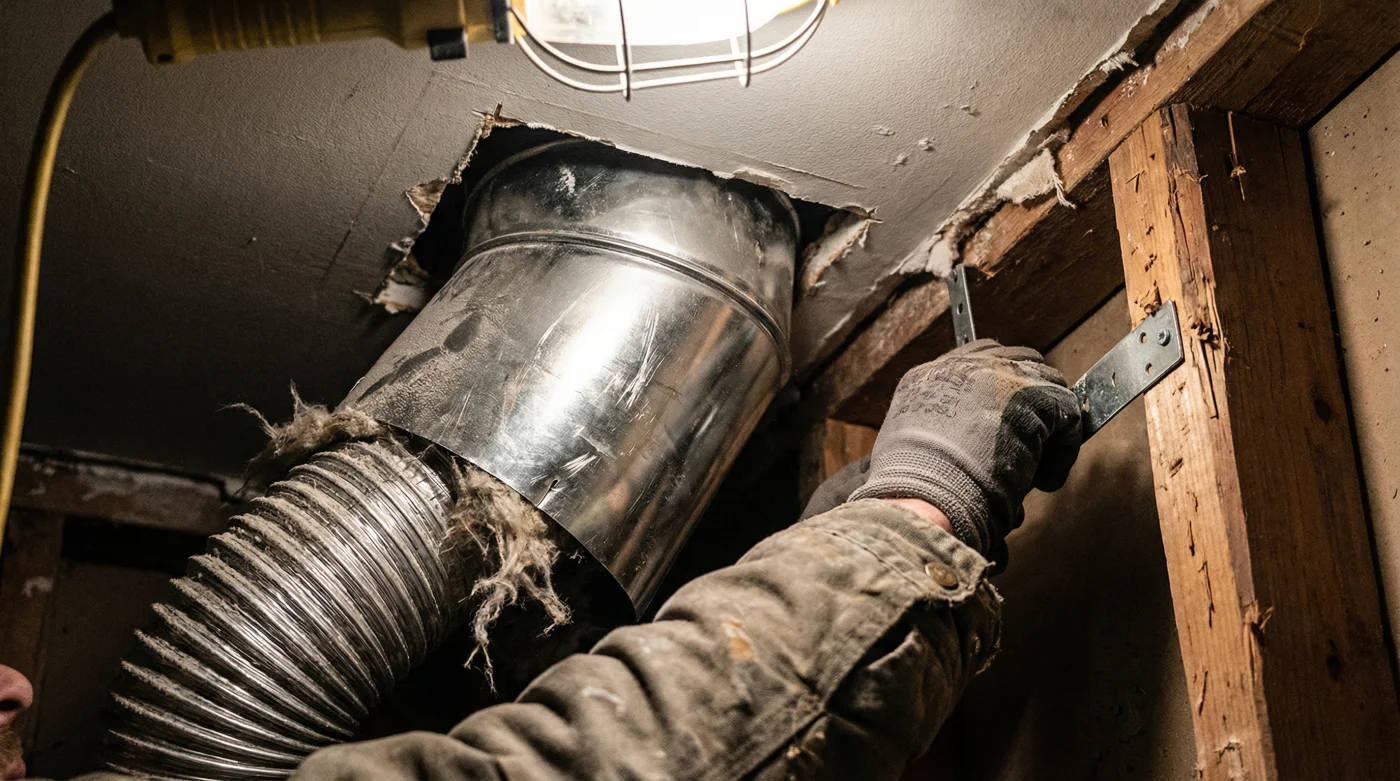
- Duct Sizing Reality: A 600 CFM hood cannot physically push air through a standard 4-inch or 6-inch pipe. You will need to upgrade to 8-inch or 10-inch rigid ducting. Flexible foil ducting is explicitly banned for gas range exhaust.
- The Capture Area Strategy: If you must stay under 400 CFM to save your budget, buy a hood that extends a full 24 inches over the front burners. A physically larger hood operating at a lower speed is far more effective than a tiny, flush-mounted hood screaming at high speed.
Finding Peace in the Code
It is easy to view municipal building codes as a frustrating barrier to your dream kitchen, a pile of red tape standing between you and that beautiful brass-trimmed stove. But when you reframe this friction, the hidden costs reveal their true value.
Proper ventilation is the silent guardian of your home’s longevity. By managing the air correctly, you are preventing greasy moisture from degrading your expensive new cabinetry. You are ensuring that the air your family breathes remains crisp and free of combustion byproducts, even when you are searing a steak at 500 degrees Fahrenheit.
When you understand the mechanics of the air in your home, the renovation becomes about more than just surface-level aesthetics. It becomes about crafting an environment that is structurally sound, deeply safe, and effortlessly functional. The money spent on unseen ductwork and dampers is not a penalty; it is an investment in a kitchen that breathes perfectly with you.
“We don’t build houses to hold stagnant air. We build systems that allow a home to exhale its toxins and inhale freshness without compromising the safety of the people inside.”
| Key Point | Detail | Added Value for the Reader |
|---|---|---|
| The 400 CFM Rule | Hoods over 400 CFM legally require makeup air. | Prevents you from being blindsided by a $2,000+ unbudgeted mechanical addition. |
| Backdrafting | High-power fans pull exhaust from other gas appliances. | Protects your family from hidden carbon monoxide exposure during cooking. |
| Capture Area Over Power | A wider, deeper hood catches smoke better than a small, high-speed fan. | Allows you to buy a compliant, quieter 390 CFM hood while keeping air perfectly clean. |
Code and Ventilation FAQ
Do these rules apply if I already have a gas stove?
Generally, existing setups are grandfathered in. However, the moment you pull a permit for a remodel or upgrade your stove to a higher BTU model, the new municipal codes will immediately apply to your project.
Can I just open a window instead of installing makeup air?
While opening a window technically provides replacement air, modern building codes require an automatic, motorized makeup air damper. The inspector will not approve a system that relies on human memory to operate safely.
Why doesn’t an electric or induction stove have the same rules?
Induction and electric stoves do not produce combustion byproducts like carbon monoxide or nitrogen dioxide. While they still require venting for grease and steam, their baseline CFM requirements are drastically lower.
How do I know the CFM of my current hood?
Remove the metal grease filters and look inside the housing with a flashlight. There is usually a manufacturer sticker listing the model number, wattage, and maximum CFM rating.
Is makeup air heated?
In cold climates, yes. Pulling in 600 CFM of freezing winter air will instantly chill your house. Many local codes in northern regions mandate that the makeup air system includes an inline electric heater to temper the incoming air.