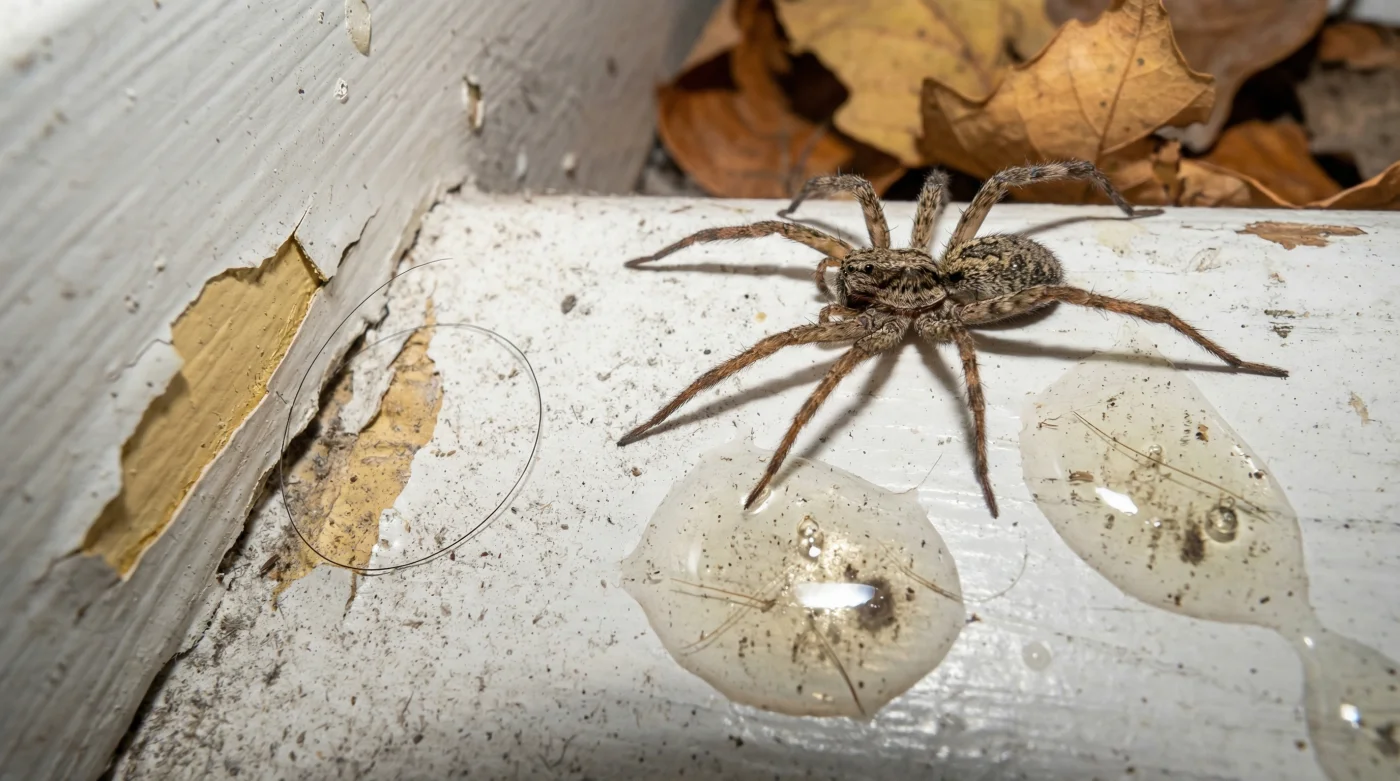
The October air finally snaps cold, bringing that familiar urge to batten down the hatches. You swap out the lightweight linens for heavy wool, check the weatherstripping, and begin the annual ritual of pest deterrence. Armed with a glass spray bottle, you mist concentrated peppermint oil along the windowsills and doorways. The house smells sharply of crushed mint leaves, crisp and clean.
You assume the perimeter is secure. It feels like a victory, a natural barrier against the creeping, eight-legged intruders seeking winter refuge. Social media promised this was the perfect defense, a fragrant shield keeping your corners clear of webs.
Then, three days later, a shadow darts out from under the baseboard heater. By the weekend, a sturdy, disorganized web appears near the ceiling fan in the guest room. The minty aroma is still strong, yet the arachnids have arrived right on schedule. The botanical extract did not fail; it actually performed exactly as its chemical structure dictates.
The reality of nature rarely follows viral advice. While highly concentrated mint effectively burns the delicate scent receptors of ants, mice, and certain flies, a specific group of fall spiders interprets that same potent smell differently. You have not built a fortress; you have unwittingly set up a fragrant bed-and-breakfast.
The Anatomy of a Minty Misstep
Think of your home’s ecosystem like a busy transit station rather than a sealed vault. When you spray potent botanical oils, you are attempting to throw up a chemical roadblock. The popular myth suggests that spiders, smelling through microscopic organs on their legs, will retreat from any overpowering odor.
But this relies on a flawed understanding of biology. You are treating a complex predator like a common scavenger. Web-building arachnids do not forage by scent; they rely on vibrations and localized air currents. When you heavily spray doorways with mint, you actually repel the ants and flies, pushing them out of hiding. Those dying or disoriented insects stumble into the open, creating a highly visible, easy buffet. The spider is not moving toward the mint; it is moving toward the feast the mint just provided.
Marcus Thorne, a 54-year-old entomologist working out of the Ohio Valley, spent three decades watching homeowners accidentally cultivate indoor spider populations. He recalls visiting a historic farmhouse where the owner, desperate to keep wolf spiders out, had soaked her porch perimeter in pure peppermint extract. Marcus pointed out a glaring flaw: the oil was leaving a slightly sticky residue that trapped dust and moisture. The spiders, completely unbothered by the aromatic compounds, were drawn to the microscopic hydration and the sluggish beetles caught in the minty slick. The house was not repelling the hunters; it was feeding them.
To reclaim your space, you have to recognize exactly who is ignoring your boundaries. Treating them as a monolith simply leads to frustration.
Recognizing the Unbothered Intruders
Wolf spiders and jumping spiders belong to a tactile, visual class of predators. They are chasing heat and movement.
When the autumn frost hits, the radiant warmth escaping from the gaps beneath your weatherstripping is a beacon. The mint sitting on the floorboards means nothing to an insect that hunts by sight. They walk right over it, focused entirely on the warm draft carrying the promise of a quiet, dark basement.
Cellar spiders, commonly known for their impossibly long legs and messy webs, actively seek out the very corners where airborne oils settle. Because they often hang upside down in high, undisturbed spaces, the heavy mint molecules sink to the floor, leaving their ceiling habitats completely untouched.
Common house spiders will build their chaotic tangles anywhere they sense trapped humidity. If you mix your peppermint with tap water and spray it generously in bathroom corners or behind washing machines, you are just watering their hunting grounds. The water evaporates slowly in those stagnant pockets, creating the exact microclimate they prefer for egg-laying.
The Acetic Acid Protocol
Shifting away from the mint myth requires a different chemical approach. If you want to deter an eight-legged predator, you must disrupt its mechanical reality, not just its sense of smell.
The acetic acid in household vinegar does not just smell sour; it actively burns upon contact. Because a spider’s exoskeleton is sensitive to acidic environments, traversing a dried vinegar barrier causes mild, non-lethal chemical friction that forces them to retreat.
Applying this method requires deliberate, minimalist technique. You are not trying to flood the room; you are painting invisible tripwires across their preferred transit routes.
- Empty a clean spray bottle and fill it with equal parts white vinegar and distilled water. Skip tap water, as its mineral content neutralizes the acidity.
- Wipe down the target surface first. Dust and cobwebs buffer the acid, rendering it useless.
- Mist a tight, continuous line across the exact threshold: the bottom edge of window frames, the sweep of the exterior door, and the precise seam where the baseboard meets the floor.
The application needs to dry completely. Do not wipe it away. The acetic residue remains active long after the sour smell fades from human detection.
- Acid Ratio: 50/50 White vinegar to distilled water.
- Application Temperature: Room temperature (around 68 Degrees Fahrenheit) ensures the mixture adheres without evaporating too rapidly.
- Reapplication Cycle: Every 14 days, or immediately after heavy rain if sprayed on exterior window lips.
Living Alongside the Micro-Wilderness
Mastering the subtle physics of your home’s perimeter changes the way you view autumn. Instead of engaging in a blind, fragrant war against the shifting seasons, you are calmly setting intelligent boundaries.
Understanding the mechanical reality of your space brings a quiet confidence. When you stop relying on sweet-smelling myths and start respecting the actual biology of the creatures outside, the fear of the creeping unknown fades.
By replacing a misguided habit with a targeted, scientific adjustment, you do more than keep the corners of your guest room clear. You create a living space that breathes easier, grounded in practical reality rather than wishful thinking. Your home remains a sanctuary, protected by knowledge rather than perfume.
A fragrant house is rarely a fortified one; true pest deterrence relies on disrupting the environment, not just masking it.
| Key Point | Detail | Added Value for the Reader |
|---|---|---|
| Botanical Extracts | Highly aromatic, oil-based, attracts moisture | Leaves a residue that can inadvertently harbor insect prey. |
| White Vinegar | Acetic acid disrupts the exoskeleton upon contact | Provides a genuinely hostile boundary that dries completely clean. |
| Distilled Water | Mineral-free dilution agent | Prevents hard water spots and maintains the acid’s potency. |
Frequently Asked Questions
Will vinegar damage my hardwood floors?
Undiluted vinegar can dull polyurethane finishes over time. Always use a 50/50 mix with distilled water and apply sparingly near baseboards rather than directly on the walking surface.How long does the acetic acid barrier last?
Indoors, the residue remains effective for about two weeks. High-traffic areas or spots exposed to direct sunlight may require a weekly touch-up.Why shouldn’t I just use a chemical insecticide?
Broad-spectrum sprays often leave toxic residues where pets and children play, while targeted acidic barriers physically deter pests without lingering indoor toxicity.Does apple cider vinegar work the same way?
No. The natural sugars present in apple cider vinegar will actually attract fruit flies and ants, creating a completely different pest issue in your kitchen.What do I do if I already sprayed peppermint everywhere?
Simply wipe down the affected areas with a warm, soapy cloth to break down the oil residue, dry thoroughly, and apply the vinegar mixture the following day.