Late July afternoon. You stand in the center of your newly finished living room. The afternoon sun scrapes across the long wall, but there are no shadows. No bumps, no tape joints, no roller marks. Just the soft, light-absorbing perfection of a fresh coat of Sherwin-Williams matte paint. It feels like standing inside a high-end art gallery.
This is the dream the modern design world sells. A flat, velvety finish acts like a magic eraser for aging drywall and rushed plaster jobs. It swallows the light entirely, tricking the eye into seeing architectural perfection where there is only ordinary framing.
But walk closer to where that living room meets the hallway leading to the kitchen. Run your fingertips lightly over the surface. Sometimes, beneath that flawless velvet illusion, the wall feels ever so slightly clammy.
You are experiencing the hidden friction of current interior design trends. While that dead-flat finish offers a breathtaking aesthetic, it behaves like a plastic bag drawn tightly over your home’s framing. You traded visible drywall flaws for a much quieter, more insidious problem: trapped wall moisture.
The Breathing Wall Paradox
To understand what is happening, you have to stop looking at paint as just a color and start seeing it as a functional membrane. A matte finish achieves its signature dullness by leaving microscopic peaks and valleys on the surface. These rough edges scatter light, which is exactly why your wall looks so smooth.
Yet, those same microscopic structures create a highly porous sponge. It absorbs airborne humidity rapidly, pulling in the ambient moisture from your morning coffee brewing or a distant hot shower. Once inside, the heavy concentration of solids in premium paints forms a rigid barrier that refuses to let that moisture easily evaporate back out.
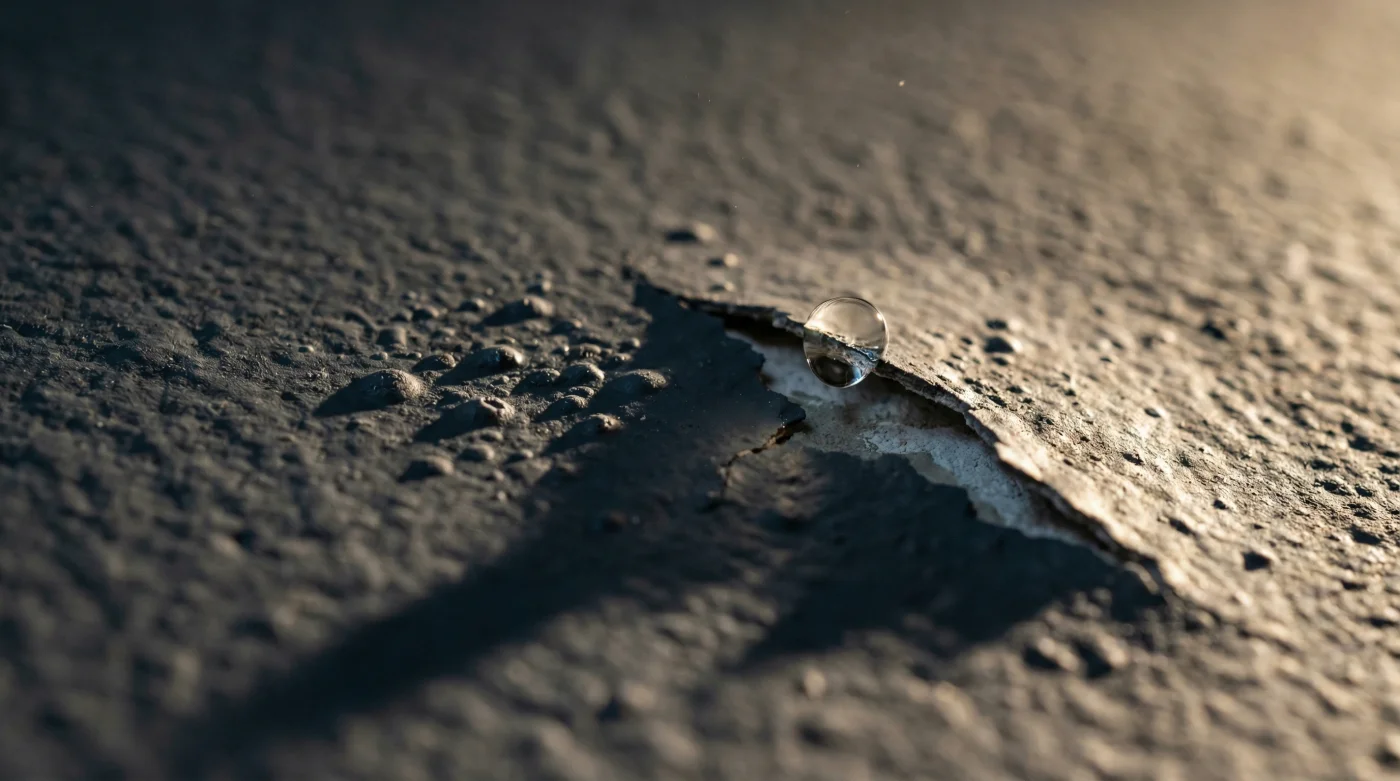
Marcus Thorne, a 48-year-old architectural painter working in the muggy, unpredictable climate of coastal Virginia, spent a decade fighting this exact battle. Clients would demand flat finishes everywhere to mimic magazine spreads. Six months later, Marcus would be called back to inspect mysterious, sand-like bumps forming near baseboards and door frames. He realized the homes were not failing; the walls were literally suffocating under the trend. The trapped humidity was pushing against the paint film, causing microscopic blisters that felt like sandpaper.
Adjusting for Your Home’s Geography
Your house is a collection of micro-climates. Treating every room to the same visual finish ignores the physical reality of how air moves through your hallways. Design must respect the environment if it is going to last longer than a single season.
For the Living Room Loyalist: If you have a dedicated, closed-off living room with consistent climate control and minimal foot traffic, matte remains a stunning choice. It will hide the sins of old settling cracks and give you that rich, absorbing depth. Just ensure your HVAC system is actively managing the room’s humidity.
For the Open-Concept Realist: Homes where the living room bleeds directly into the kitchen or dining area face a different reality. Boiling pasta water and simmering stocks create invisible vapor clouds that travel horizontally. Here, a flat finish acts like a humidity trap, slowly degrading the bond between the drywall paper and the primer.
For the Transitional Space Pivot: Hallways, stairwells, and the areas bordering exterior doors are the lungs of your house. They experience sudden temperature shifts and drafts. This is where the strict adherence to flat finishes needs to break.
The Eggshell Strategy
You can maintain a highly sophisticated look without turning your walls into moisture traps. The solution requires subtle calibration, specifically shifting to an eggshell finish in those vulnerable transitional zones. Eggshell offers enough resin to create a protective, breathable seal without flashing awkwardly in the light.
Implementing this shift is straightforward, but it demands intention. You are no longer just rolling color onto a board; you are creating a durable skin for your home.
- Identify the transition lines where humidity fluctuates, such as archways leading to kitchens or utility rooms.
- Switch to a high-quality eggshell in the exact same color code.
- Feather the edges slightly if the transition happens on an open wall, though natural architectural breaks are ideal.
- Maintain the room temperature between 65 and 75 degrees Fahrenheit during application to ensure the resins cure evenly without trapping existing humidity.
The Tactical Toolkit: Keep a hygrometer nearby; aim for an indoor humidity below 50 percent before you open the can. Allow a full 4 hours of drying time between coats, and rely on a 3/8-inch nap microfiber roller to lay down an eggshell texture that mimics the smoothness of your matte walls.
Form and Function in Quiet Alignment
The beauty of a well-designed space should never require compromising the health of the structure itself. When you learn to read your house—understanding where air flows, where moisture settles, and how light plays across different rooms—you stop forcing a single trend onto every surface.
Your living room retains that soft, flawless illusion where it is safe to do so. Meanwhile, the hard-working arteries of your home gain a resilient, breathable layer that silently repels the stress of daily life. You gain a quiet confidence, knowing the elegance you see on the surface is fully supported by the practical physics underneath.
A beautiful wall is not just one that looks perfectly flat in the afternoon sun; it is one that can breathe effortlessly through the changing seasons.
| Key Point | Detail | Added Value for the Reader |
|---|---|---|
| Matte Finish Light Absorption | Hides tape joints and drywall imperfections beautifully. | Saves hours of skimming and sanding old walls. |
| Moisture Trapping | Porous surface absorbs humidity but tight pigments prevent release. | Explains the cause of mysterious peeling or micro-blistering. |
| The Eggshell Pivot | Using slight sheen in transitional areas like hallways. | Protects high-traffic zones while maintaining a designer aesthetic. |
Frequently Asked Questions
Can I paint eggshell directly over my existing matte finish?
Yes, provided the wall is clean and completely dry. Lightly wash the surface and ensure room humidity is low before applying the new coat.Will the change in sheen be obvious between rooms?
If the color is an exact match, the human eye rarely notices the shift across an architectural break, like a doorway or an inside corner.Why does Sherwin-Williams matte trap moisture more than cheaper flat paints?
Premium paints have a higher volume of solid pigments to achieve that luxurious, opaque coverage. This density creates a tighter, less breathable film.What is micro-blistering exactly?
It feels like tiny grains of sand under the paint. It happens when moisture pushes through the drywall but gets trapped just beneath the paint film.Is an eggshell finish hard to clean?
Quite the opposite. The slightly higher resin content in eggshell creates a smoother microscopic surface, allowing you to wipe away smudges without burnishing the paint.