It happens at two in the morning. You pull the hallway door shut to avoid waking the rest of the house, and the metal hinges release a high-pitched, dragging screech that cuts through the quiet dark like a siren. The sound grates on your nerves, a harsh reminder of a house slowly falling out of tune.
Your muscle memory kicks in the very next morning. You reach beneath the kitchen sink for that familiar blue-and-yellow can, pop the little red straw into the nozzle, and spray a dripping coat over the hinge joints. The silence feels like victory, a quick, satisfying fix that smells faintly of sweet solvents, hardware stores, and productive Saturday mornings.
But beneath that quiet surface, a microscopic war has just been declared on your hardware. The solvent immediately washes away whatever thick factory lubrication remained deep inside the metal barrel. It flashes off into the air within hours, leaving behind nothing but a thin, sticky residue that begins pulling microscopic debris out of the room’s atmosphere.
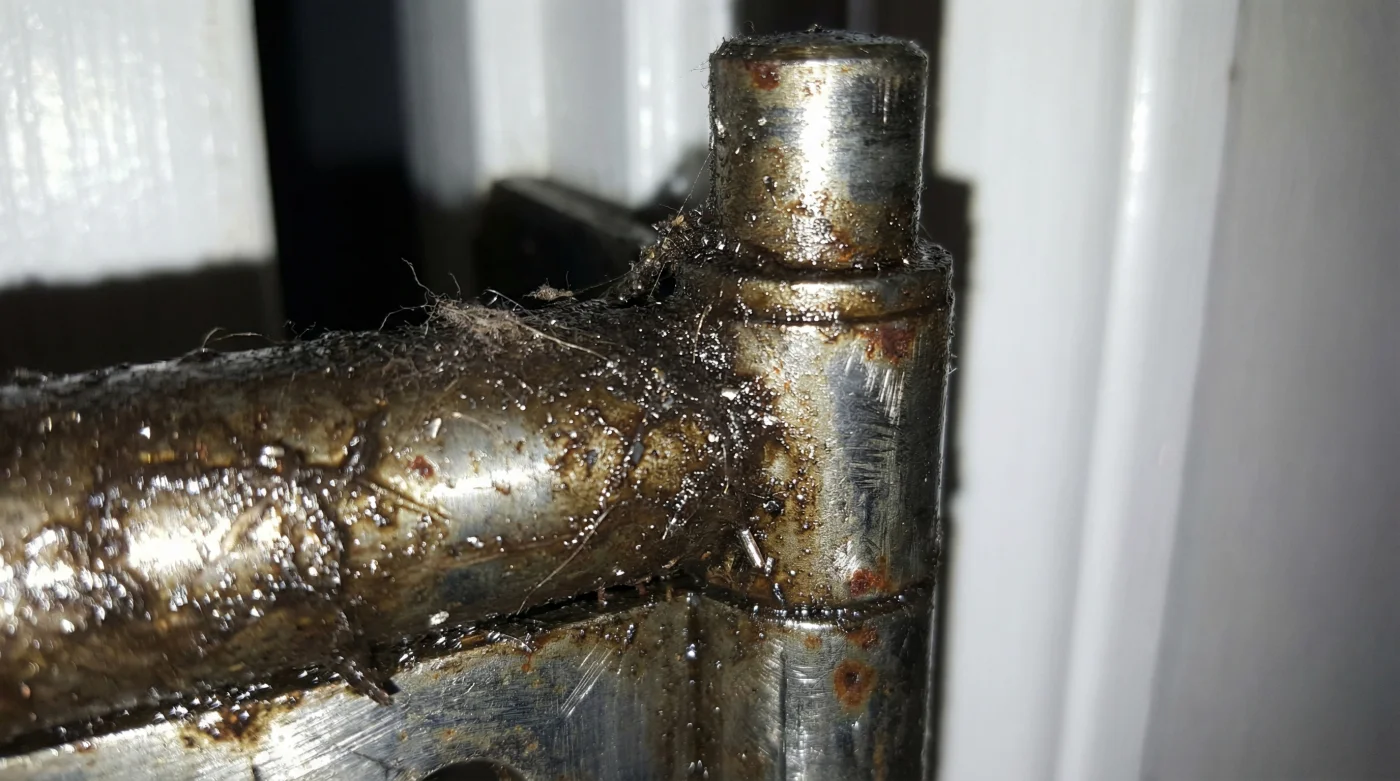
Within weeks, airborne dust, shed skin cells, fabric fibers, and pet dander stick tightly to that wet film, forming a dark, highly abrasive paste. You have built a sandbox inside your hinges. Every time you push the door open, metal grinds against this hidden grit until the steel itself begins to warp, shave down, and permanently fail.
The Solvent Mirage
We have all been handed the same mechanical myth for decades: if a part is stuck, squeaking, or resisting movement, you just spray it. But the legendary formula you are relying on was designed in San Diego back in 1953 for the aerospace industry. Its explicit purpose was to displace water on the delicate metal skins of missiles to prevent rust, not to act as a permanent friction barrier for household joints.
Treating a squeaky door hinge with a solvent-based degreaser is remarkably similar to trying to moisturize chapped skin with rubbing alcohol. It strips away the protection, temporarily masking the friction while setting the stage for aggressive, accelerated wear and tear just weeks down the line. The very product you trust to save your hardware is quietly eroding the steel barrel from the inside out.
Talk to Elias Thorne, a sixty-two-year-old architectural locksmith who has spent forty years maintaining the heavy, ornate doors of Chicago’s historic district. He refers to the famous blue can simply as the job creator. Thorne notes that while the spray acts as an incredible rust breaker for seized bolts, using it as a daily hinge lubricant creates a gummy black sludge that ruins precision metalwork. He replaces dozens of hinges a month simply because well-meaning homeowners inadvertently ground them down to nothing with abrasive dust.
The professional standard relies on completely different chemistry and a shift in maintenance philosophy. Locksmiths use physical barriers, selecting heavy compounds that actively repel dirt and maintain a long-lasting, tangible cushion between the heavy interlocking metal knuckles. They lubricate to protect, not just to quiet.
Precision Greasing for Your Reality
Not all doors endure the same environment, and your approach to silencing them should carefully match the specific demands of your home. Choosing the right friction barrier changes a fleeting, repetitive chore into a permanent, satisfying structural repair.
For the high-traffic passageways—like the heavy wooden front door, the garage entry, or a basement access—white lithium grease is the heavy-duty standard. It handles aggressive temperature shifts, clinging tightly to the metal without separating or running down your painted doorframes when the summer heat builds heavily in the entryway. It provides a thick, cushioning ride for heavy doors.
If your home features wall-to-wall carpeting, shedding pets, or high air circulation from forced-air heating, you need a dry lubricant. Polytetrafluoroethylene (PTFE) spray, commonly found on hardware shelves as dry Teflon, sprays out wet but immediately flashes off to leave a slick, white film on the metal.
This dry, plastic-like barrier completely ignores the airborne debris floating through your hallways. Dust simply bounces off, leaving the heavy hinge turning smoothly on a microscopic layer of non-stick material rather than dragging heavily through a slurry of wet, sticky household grime.
For the purists restoring antique brass fixtures or maintaining interior solid-core doors, high-viscosity mineral oil remains a traditional favorite. A single drop of heavy oil applied with a needle-tip applicator sinks deep into the barrel, conditioning the brass without the messy overspray associated with aerosol cans.
It requires more frequent application than lithium or Teflon, but it honors the original finish of historical hardware. You control the exact placement, ensuring that porous antique metals stay nourished without soaking the surrounding vintage woodwork in harsh synthetic propellants.
The Five-Minute Hinge Reset
Reversing the damage of old solvents requires a deliberate, mindful process. You cannot simply spray a fresh, high-quality compound over the old, gritty paste and expect the friction to disappear. You must reset the metal.
Gather a few simple items before starting: a clean rag, an old toothbrush, some rubbing alcohol, a lightweight hammer, and a flathead screwdriver. This is your tactical toolkit for restoring the mechanical integrity of your living space. Take your time, working on only one hinge at a time so the heavy door remains perfectly stable and aligned in its frame.
- Place the flat tip of the screwdriver beneath the hinge pin head and tap gently upward with the hammer until the pin pops free from the barrel.
- Wipe the dark, sludgy residue off the metal pin using a rag soaked heavily in rubbing alcohol, scrubbing any stubborn, dried grit with the toothbrush.
- Clean the inside of the hollow hinge knuckles using a tightly twisted corner of your alcohol-soaked rag, pulling out as much old residue as possible.
- Apply a thin, even coat of your chosen white lithium grease or dry Teflon spray directly to the surface of the clean pin.
- Drop the pin back into the metal barrel and tap it completely flush with the hammer, immediately wiping away any excess material that pushes out the bottom to protect your floors.
Beyond the Squeak
Tending to the underlying hardware of your home is an act of quiet stewardship. When your doors swing silently, without effort or friction, the entire atmosphere of your living space softens and feels more grounded. You notice the difference every time you enter a room.
You are no longer forcing your environment to cooperate through sheer habit and the application of aggressive, short-term chemicals. You respect the mechanical rhythm, understanding the materials enough to give them exactly what they need to function flawlessly over the decades. It transforms a frustrating, repetitive weekend chore into an enduring moment of pride and domestic peace.
Lubricating a hinge with a solvent is like washing your car with sandpaper. You want to build a barrier, not strip away the metal’s only defense. — Elias Thorne, Master Locksmith
| Key Point | Detail | Added Value for the Reader |
|---|---|---|
| White Lithium Grease | Heavy-duty paste that resists temperature changes. | Prevents messy drips on expensive painted doorframes. |
| Dry Teflon (PTFE) | Sprays wet but dries to a solid white non-stick film. | Keeps pet hair and dust from ruining the hinge. |
| High-Viscosity Oil | Traditional conditioning drop for vintage brass. | Protects the value and patina of antique home hardware. |
Common Hardware Friction Questions
Is WD-40 bad for all household uses? No, it is a brilliant rust-breaker and degreaser for seized bolts, but it fails as a long-term friction barrier.
Why is my door hinge creating black dust? That black powder is shaved steel mixed with solvent residue and dirt, caused by grinding friction inside the unlubricated barrel.
Can I use cooking oil in a pinch? Never use cooking oil; organic oils go rancid, attract pests, and turn into a sticky glue over time.
How often should I lubricate my interior doors? A proper application of lithium grease or Teflon spray should easily last three to five years under normal conditions.
Should I replace a hinge if the pin is rusted? If the rust is surface-level, scrubbing it with alcohol and coating it in lithium grease will save it, but heavily pitted pins must be completely replaced.