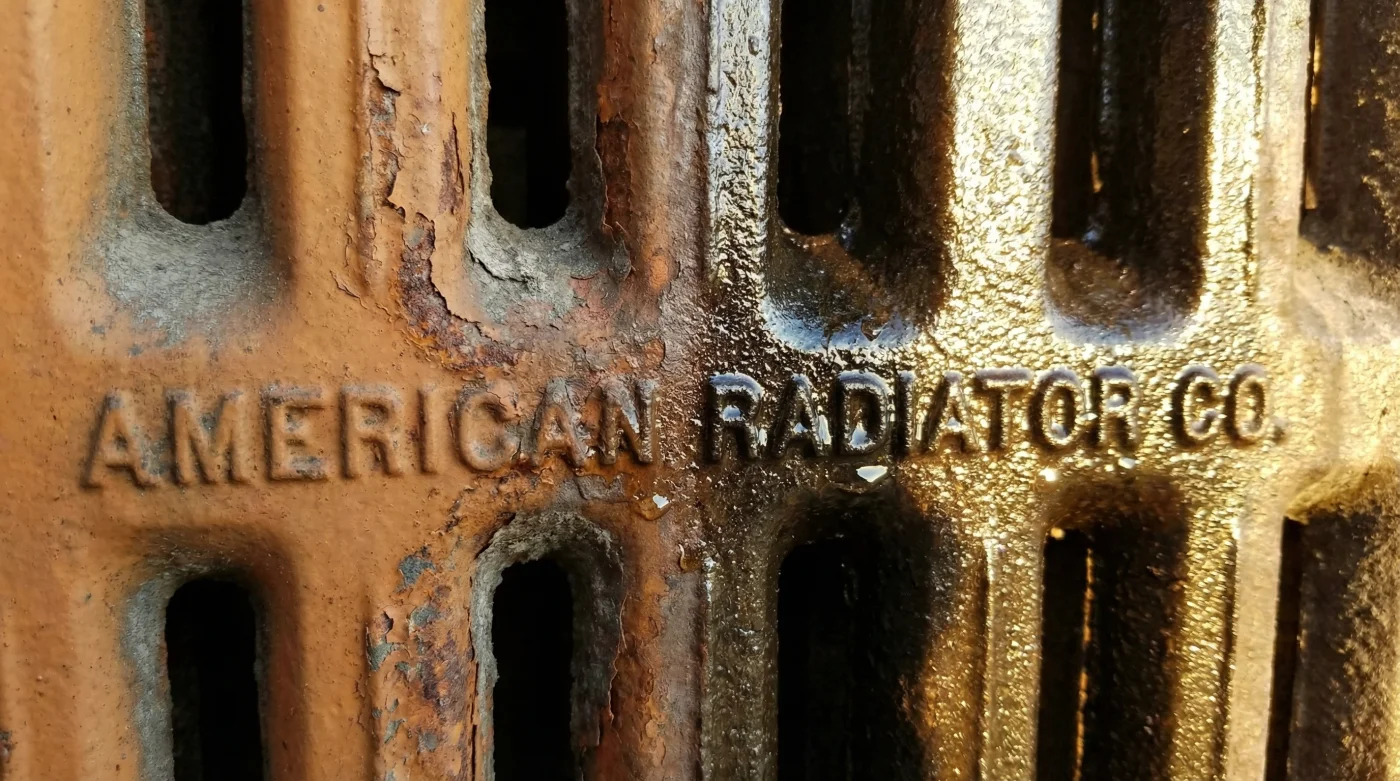
You hear the familiar, rhythmic clanking from the corner of the living room. The boiler downstairs has finally woken up, sending a rush of steam through the heavy, cast-iron ribs of your oldest radiator. But as the warmth fills the room, you look down at the fixture itself. The surface is chalky, exhausted, and mottled with patches of dull orange rust.
For years, you have assumed the only proper fix requires a brutal weekend. You picture the chaotic mess of wire brushes, angle grinders screaming through the afternoon, and the sharp, chemical headache that follows a fresh coat of high-heat enamel spray.
That aggressive approach is a modern misunderstanding of how old house materials want to be treated. Instead of treating the iron like a sterile canvas that needs to be violently stripped and suffocated under plastic paints, you can simply feed it.
With a clean cotton rag and three drops of mineral oil, you can change the entire chemistry of the surface. This humble, food-safe liquid instantly bonds to the oxidized metal, bypassing the toxic fumes and the deafening noise to reveal a deep, velvety charcoal finish.
Rethinking the Iron Epidermis
Cast iron is not a dead, impenetrable block. Under a microscope, it looks more like a rigid sponge, full of microscopic peaks and valleys. When it oxidizes, those valleys dry out and turn that familiar ashen grey. The metal isn’t dying; it is simply thirsty.
The instinct is to scrub the flaw away, grinding the metal back down to a blinding silver. But that oxidation is actually a massive advantage. It provides the exact mechanical grip needed to hold onto a stabilizing treatment without peeling or flaking.
When you wipe pure mineral oil over this dry, chalky surface, you aren’t masking the iron. You are curing it. The oil penetrates the porous oxidation, darkening it instantly. The rust isn’t covered up; it is chemically quenched, turning from a chalky liability into a rich, protective patina.
Unlike linseed oil or organic vegetable oils, mineral oil remains completely inert. It will not go rancid, it will not turn into a sticky trap for pet hair, and most importantly, it will not combust or smoke when the radiator reaches its operating temperature.
Elias Thorne, a 62-year-old architectural restorer operating out of a drafty brick warehouse in Buffalo, New York, relies entirely on this quiet method. While pulling an 1890s floral-patterned radiator from a demolition site, he doesn’t reach for a sandblaster or toxic chemicals.
“People torture these beautiful antiques,” he says, working a warm rag into the intricate iron loops. “They choke them in thick white gloss that eventually cracks and smells like burnt plastic every winter. A good iron casting just wants a heavy drink of oil.” Elias uses simple, laxative-grade mineral oil from the pharmacy—safe enough to swallow, meaning it emits absolutely zero toxic fumes when the radiator hits 180 degrees Fahrenheit.
Adjusting the Technique for Your Space
Not every radiator behaves exactly the same way. The style of the casting and the specific climate of your home dictate how the metal will receive the oil. You must read the surface before you begin.
For the Victorian Purist: If your radiator features intricate floral or geometric scrollwork, a flat rag will bridge over the details, leaving dry grey dust in the crevices. Use a stiff, natural-bristle stencil brush to stipple the mineral oil deep into the decorative valleys. The oil will pool slightly, so follow up with a dry cloth to dab away the excess.
For the Mid-Century Minimalist: Smooth, flat-column radiators are highly unforgiving of uneven application. You want to apply the oil in long, continuous, vertical strokes. Think of it like finishing a fine dining table. Avoid circular motions, which can leave a cloudy residue on large, flat iron planes.
For the Neglected Basement Behemoth: If you are dealing with heavy, scaly rust that feels like coarse sandpaper, the oil alone won’t lay flat. You must gently scuff the highest peaks of the rust with fine 0000 steel wool before oiling. You are not trying to remove the rust entirely, just knocking down the sharpest edges so the oil can create a uniform sheen.
The Mindful Application Process
The actual restoration takes less time than taping off your baseboards for a traditional paint job. It is a quiet, rhythmic process that requires only your hands and a few basic supplies.
The Tactical Toolkit:
- 16 oz bottle of 100% pure food-grade mineral oil
- A stiff nylon detailing brush (or an old toothbrush)
- Two lint-free cotton rags (old t-shirts work perfectly)
- A clean, dry microfiber cloth for the final buffing
Start by vacuuming the radiator with a brush attachment to remove loose dust and cobwebs. A clean canvas ensures the oil sinks directly into the iron, rather than creating a muddy paste on the surface. Next, pour a small amount of mineral oil onto your rag. You want the fabric to be damp, not dripping.
Massage the oil directly onto the cold cast iron. You will see the transformation immediately as the metal turns a deep, saturated black-grey. Work from the top down, letting gravity help with any minor drips that might occur.
Once the entire unit is coated, take your clean, dry microfiber cloth and vigorously buff the surface. You are removing the slickness so the radiator feels completely dry to the touch. When the boiler kicks on and the metal heats up, the oil will bake into the pores, emitting no smell, only a gentle, radiant warmth.
The Warmth of Quiet Stewardship
There is a distinct psychological relief in fixing something heavy and permanent without resorting to harsh chemicals. You bypass the hazard of filling your living room with volatile organic compounds (VOCs) that off-gas for months, threatening the air quality of your home.
By working with the natural behavior of the iron, you step out of the cycle of endless painting and peeling. You have stopped fighting the age of your home and started managing it with grace. The maintenance becomes a simple ten-minute wipe-down once every two years, rather than a dreaded week-long renovation project.
Every time the heat clicks on, you won’t smell burning enamel. You will simply feel the heavy, comforting presence of an old system doing exactly what it was built to do, quietly preserved by your own hands.
The truest restoration doesn’t force a material to look brand new; it allows the material to carry its history with dignity.
| Key Point | Detail | Added Value for the Reader |
|---|---|---|
| High-Heat Enamel Spray | Requires heavy sanding, masks the iron detail, emits toxic VOCs during application and curing. | Avoids a weekend of hazardous prep work and lingering chemical odors in your living space. |
| Wire Brushing | Destroys the protective patina, creates airborne metallic dust, highly labor-intensive. | Saves hours of physical strain and keeps fine, dangerous particulates out of your lungs. |
| Mineral Oil Treatment | Bonds directly to porous oxidation, cures using radiator heat, 100% food-safe and fume-free. | Instantly restores the deep charcoal aesthetic with a ten-minute, wipe-on application. |
Frequently Asked Questions
Will the mineral oil smoke when the radiator gets hot?
No. Pure mineral oil has a high flash point and remains stable at the typical operating temperatures of steam and hot water radiators (180-215 degrees Fahrenheit). It will not smoke or emit fumes.Do I need to strip old paint off first?
If your radiator is heavily coated in chipping paint, the oil cannot reach the iron beneath it. This method works specifically on bare, oxidized, or chalky cast iron surfaces. Minor paint flakes should be gently scraped away first.How often do I need to reapply the oil?
For a radiator in active use, a light maintenance buffing every two to three years is usually sufficient to keep the deep charcoal finish looking rich and hydrated.Can I use olive oil or vegetable oil instead?
Never use organic cooking oils. Vegetable, olive, and canola oils will go rancid, emit a terrible odor when heated, and turn into a sticky residue that acts like a magnet for dust and pet hair.Does the radiator need to be turned off during application?
Yes. Always apply the mineral oil while the radiator is completely cool to the touch. This protects your hands from burns and allows you to buff off the excess oil safely before the curing process begins.