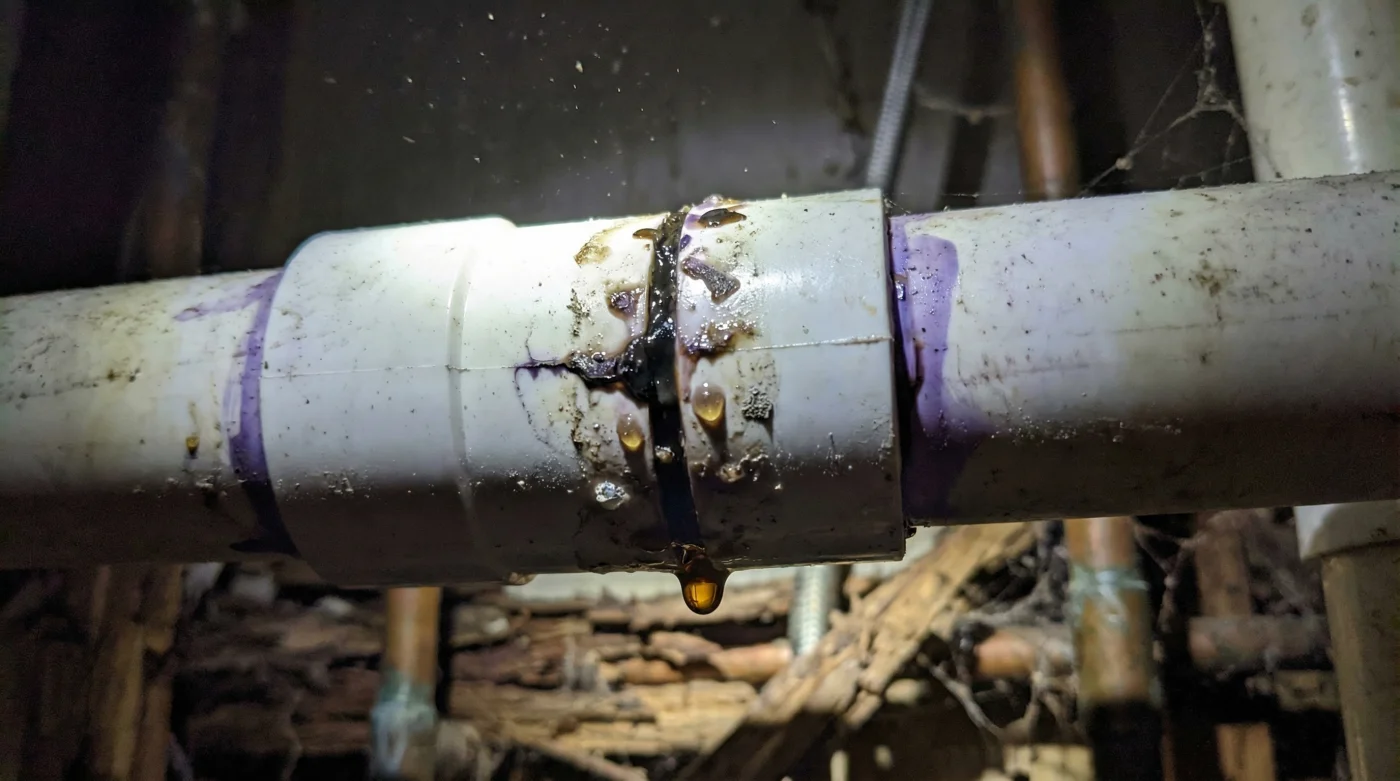
Imagine the slow, frustrating pool of soapy water gathering around your ankles during a Tuesday morning shower. You reach under the sink, grabbing that heavy, brightly colored plastic bottle. The thick gel glides down the drain with a satisfying weight, promising to melt away the grime. You wait fifteen minutes, run the hot water, and watch the vortex clear the basin. It feels like a small domestic victory.
But behind the drywall, something else is happening. That heavy liquid doesn’t just sit on the clump of hair and soap scum. It pools in the curved belly of the P-trap, pressing against the very seams holding your plumbing together.
We treat our pipes like invincible underground tunnels, pouring industrial-strength compounds down the drain without a second thought. The reality is far more delicate. Modern residential plumbing relies heavily on PVC—polyvinyl chloride—held together not by threads or bolts, but by a precise chemical weld. When you dump thermal-reactive gels into that system, you aren’t just clearing a clog. You are slowly dismantling the architecture of your home.
The Invisible Fire Below the Sink
Think of a PVC joint not as a glued seam, but as a melted plastic scar. When a plumber installs a pipe, they use a primer and cement that chemically fuses the two pieces of plastic into a single, continuous run. It is brilliant, waterproof, and designed to last for decades.
The problem begins when thermal friction is introduced. Commercial drain clearing gels rely on lye, sodium hypochlorite, and aluminum. When these ingredients meet standing water, they create an intense exothermic reaction. They generate heat—sometimes upwards of 200 degrees Fahrenheit—to burn through blockages. But that same heat softens the PVC. More critically, the caustic chemicals attack the microscopic imperfections in the welded joints. Over time, that chemical scar begins to crack, warp, and dissolve. You might fix the slow drain today, but you are quietly buying yourself a flooded ceiling next year.
Marcus Vance, a 48-year-old master plumber in Chicago, has spent two decades cutting open drywall to fix the aftermath of this exact habit. ‘People call me crying because their first-floor kitchen ceiling just collapsed under a wave of gray water,’ he explains, wiping pipe dope off his calloused hands. ‘Nine times out of ten, I pull down the ruined pipe, and the PVC cement at the trap is eaten away entirely. They thought they were maintaining their house, but they were actually burning it down from the inside out.’
Adjusting Your Approach by Clog Type
If the heavy chemical gels are off the table, the strategy has to shift from brute force to calculated maintenance. Every sink behaves differently, and matching your method to the specific friction point is how you protect your infrastructure.
For the Hair-Trapped Bathroom Vanity
Bathroom clogs are mechanical. They are tightly bound webs of long hair and sticky toothpaste. No chemical is going to politely untangle that. You need a simple, barbed plastic snake. It costs three dollars, slides past the stopper, and pulls the physical mass out by the root. It is entirely safe for the plastic joints and solves the problem in thirty seconds.
For the Grease-Heavy Kitchen Sink
Kitchen blockages are arterial plaque. Cold bacon grease and olive oil coat the walls of the pipe, catching coffee grounds and food scraps until the passage closes entirely. Throwing boiling water and dish soap down the drain is a good start, but it only moves the grease a few feet further down the line before it cools and hardens again.
For the Sluggish Utility Drain
Basement sinks and laundry drains suffer from lint, mud, and sediment. These require high-volume flushing rather than targeted unclogging. A wet/dry vacuum placed directly over the drain can pull the sediment up and out, entirely bypassing the need to push it through the delicate bends of your plumbing.
The Biological Alternative
The secret to preserving your pipes while keeping them clear lies in living bacteria. Plumbers rely on enzymatic cleaners—cultures of bacteria that literally eat organic waste without generating a single degree of heat. It is slow, methodical work, but it leaves the PVC cement completely untouched.
To transition to an enzymatic routine, follow this simple protocol to let the bacteria feed overnight, undisturbed by running water:
- Wait until the end of the day when no more water will be run.
- Run warm water for sixty seconds to heat the pipe walls.
- Pour exactly one cup of the liquid enzyme mixture directly into the drain.
- Leave the sink completely alone for at least eight hours.
- Flush the system with warm water the next morning.
Your tactical toolkit for this biological approach requires precise measurements and a shift in expectations.
- Water temperature: 95 to 105 degrees Fahrenheit. This is just above body temperature, enough to wake the bacteria without boiling them.
- Frequency: Apply this treatment once a month for preventative maintenance.
- Patience: Enzymes take 8 to 12 hours to digest a moderate fat buildup, so patience is a strict requirement.
Peace of Mind in the Walls
There is a profound comfort in knowing exactly how your home operates. When you stop relying on harsh, reactive solutions, you stop fighting against the materials that shelter you. Transitioning from aggressive chemical gels to biological maintenance changes the way you interact with your plumbing.
It moves you away from the panic of a flooded basin and into a rhythm of quiet, predictable care. You are no longer treating the symptoms with a sledgehammer. Instead, you are working with the ecosystem of your home, ensuring that the water flows freely, the joints hold tight, and the walls remain perfectly dry for the years to come.
‘A clean pipe is not the one you burn through with acid; it is the one you maintain with patience.’ – Marcus Vance
| Key Point | Detail | Added Value for the Reader |
|---|---|---|
| Chemical Gels | Exothermic heat melts PVC cement | Prevents sudden, expensive pipe failures |
| Enzymatic Cleaners | Bacteria digest organic waste | Safe, long-term pipe maintenance |
| Mechanical Snakes | Physically pulls out hair clogs | Instant, zero-damage bathroom fix |
Frequent Questions
Is boiling water safe for PVC pipes?
It might seem like a harmless, natural fix, but boiling water actually exceeds the safe temperature threshold for standard residential PVC. Over time, it can soften the plastic and warp the cement joints.How fast do enzymatic cleaners work?
Because they use living bacteria rather than harsh acids, they require a bit of patience. Giving them 8 to 12 hours of undisturbed time—ideally overnight—allows them to properly digest organic matter.Can I use bleach to clear a slow drain?
While it feels like bleach cleans everything, it acts primarily as a sanitizer rather than a degreaser. It will simply wash right over a hair or grease clog without breaking it down.Why does my kitchen sink smell bad?
That sour odor usually comes from rotting food particles trapped in the hardened grease lining your P-trap. Enzymatic cleaners are perfect here, as they digest the specific residue causing the smell.Are chemical gels safe for metal pipes?
Even though metal feels stronger than plastic, older pipes are highly susceptible to corrosion from the caustic acids in chemical gels. Frequent use can thin the metal walls and eventually cause tiny pinhole leaks.